
HVAC Installation - Maryland Fix & Flip
Maryland has one of the most demanding HVAC climates on the East Coast. Summers bring high humidity and heat indexes frequently exceeding 100 degrees Fahrenheit. Winters deliver sustained cold with temperatures dropping into the single digits during polar vortex events. A Maryland home without a properly sized, functioning HVAC system is unmortgageable for FHA and VA buyers, uninhabitable during weather extremes, and – in the investor’s experience – the single item that kills a showing faster than any other condition. Buyers who walk in on a hot July day to a house with no air conditioning do not stay long enough to appreciate the new kitchen.
HVAC is Phase 5 in Fortune Homes MD’s 12-phase rehab sequence – coordinated with plumbing and electrical rough-in as part of the MEP phase, before walls close. This sequencing is critical: ductwork must be installed in open wall and ceiling cavities, refrigerant lines for mini-split systems must be run before drywall, and the system must be operational before final inspections. Getting HVAC onto the project schedule early – not as an afterthought after walls are closed – is the difference between a clean, integrated installation and an expensive patch-and-chase operation.
Fortune Homes MD installs complete HVAC systems for Maryland fix-and-flip investors: central forced-air heat pump and gas furnace systems with new or replacement ductwork, ductless mini-split heat pump systems (single-zone and multi-zone), high-velocity air systems for historic properties, and supplemental heating solutions. We match the system type to the property: a Baltimore City rowhouse with no ductwork and original plaster walls gets a different HVAC recommendation than a 1980s Baltimore County colonial with existing duct infrastructure.
Every HVAC installation Fortune Homes MD performs is sized using Manual J load calculations – not rules of thumb or square footage estimates. An undersized system runs constantly and never reaches a setpoint. An oversized system short-cycles, leaves humidity uncontrolled, and wears out faster. Both scenarios produce buyer complaints and warranty callbacks. Manual J sizing is the engineering basis for getting HVAC right the first time.
No HVAC on Your Maryland Flip? We Design, Install, Permit, and Commission It. Free HVAC assessment and system recommendation | (410) 413-0739 | info@fortunehomesmd.com |

Why Maryland's Climate Creates Specific HVAC Requirements
Maryland Climate Factor | HVAC Demand | Investor Specification Implication |
Summer: 90-100+ degree heat index; 75-85% relative humidity | High cooling load; humidity control critical for mold prevention | Properly sized cooling capacity; dehumidification capability |
Winter: Average lows 20-30F; polar vortex events below 0F | Sustained heating demand; heat pumps need backup heat at low temps | Heat pump with emergency/auxiliary heat; or dual-fuel (heat pump + gas furnace) |
High annual humidity (Coastal Plain, Baltimore City) | Elevated latent cooling load; mold risk in unconditioned spaces | High-efficiency system with dehumidification; properly sized – not oversized |
Chesapeake Bay and coastal proximity (Anne Arundel, Eastern Shore) | Salt air accelerates outdoor unit corrosion | Coastal-rated outdoor units with corrosion-resistant coatings |
Wide seasonal temperature swing (50+ degree annual range) | System must perform well in both heating and cooling modes | Heat pump HSPF2 rating matters as much as SEER2 for Maryland |
Older housing stock; poor insulation; air infiltration | Higher-than-expected heating and cooling loads in pre-1980 homes | Manual J load calc essential; do not undersize for leaky envelope |
Maryland Climate Zone Note: Maryland spans two IECC climate zones: Zone 4A (mixed-humid) covers most of the state including Baltimore, Montgomery, Howard, Anne Arundel, and Prince George’s Counties. Zone 5A (cool-humid) covers the western mountain counties. Zone 4A drives the HVAC specification for most Maryland fix-and-flip properties: a system that handles high summer humidity loads as well as sustained winter heating demand, with a minimum SEER2 rating of 15 for cooling efficiency. For 2026 IRA tax credit eligibility, systems must meet ENERGY STAR criteria – typically SEER2 16+ and HSPF2 8.5+ for heat pumps. |
HVAC System Types for Maryland Fix-and-Flip Properties
- Central Ducted Heat Pump System – The Standard for Most Maryland Flips
A central ducted heat pump with air handler is the most specified HVAC system on Maryland fix-and-flip properties where ductwork exists or can be economically installed. Heat pumps provide both heating and cooling from a single outdoor unit, are the dominant technology for Maryland’s mixed-humid climate, and are the most buyer-expected system in the $200,000-$600,000 Maryland residential market. Modern cold-climate heat pumps (rated to minus 13 degrees Fahrenheit) perform well through Maryland’s winter cold snaps without requiring a backup gas furnace.
Home Size | System Capacity | Installed Cost MD (with existing ducts) | Installed Cost MD (new ductwork) |
Small (<1,200 sq ft) | 1.5-2 ton | $5,500-$9,500 | $10,000-$16,000 |
Medium (1,200-2,000 sq ft) | 2-3 ton | $7,500-$12,500 | $14,000-$22,000 |
Large (2,000-2,800 sq ft) | 3-4 ton | $9,500-$16,000 | $18,000-$28,000 |
Very large (2,800-4,000 sq ft) | 4-5 ton | $12,000-$20,000 | $22,000-$35,000 |
Central heat pump installation includes: outdoor condenser/heat pump unit; indoor air handler with coil; refrigerant line set (line set, electrical, and communication wiring); programmable or smart thermostat; condensate drain; all permits and inspections; system startup and commissioning; Manual J load calculation. Ductwork is a separate line item – see Section 4 below.
- Dual-Fuel System – Heat Pump Plus Gas Furnace
A dual-fuel system pairs an electric heat pump with a gas furnace in a single air handler. The heat pump provides efficient heating down to approximately 35-40 degrees Fahrenheit; below that threshold, the gas furnace takes over as primary heat source. In Maryland, dual-fuel systems make the most economic sense for properties in western Maryland where winter temperatures regularly drop below the heat pump’s efficient operating range – and in any Maryland market where natural gas is available and the buyer pool favors gas heat.
System Type | Best Application | Maryland Installed Cost (existing ducts) |
Dual-fuel (heat pump + gas furnace) | Western MD; any MD market where gas heat preferred; 2-4 ton range | $9,000-$16,500 |
Cold-climate heat pump only (no gas backup) | Most of MD; rated to -13F; satisfactory for Zone 4A without gas | $8,000-$14,000 |
Gas furnace with central A/C (no heat pump) | Where gas is strongly preferred; older buyer demographic; western MD | $7,000-$13,000 |
Electric air handler + heat pump (no gas) | All-electric properties; no gas line present; modern construction | $7,500-$13,500 |
- Ductless Mini-Split Heat Pump – Baltimore City Rowhouses and Properties Without Ductwork
Ductless mini-split heat pump systems are the right HVAC solution for two specific and common Maryland fix-and-flip scenarios: (1) Baltimore City rowhouses and pre-WWII properties where installing ductwork is cost-prohibitive or structurally impractical; and (2) properties with room additions, converted garages, or finished basements that are not served by the existing central duct system. Mini-splits provide both heating and cooling from wall-mounted or ceiling-mounted indoor heads connected to an outdoor compressor unit, with no ductwork required.
Mini-Split Configuration | System Capacity | Maryland Installed Cost | Best Application |
Single zone (1 indoor head) | 9,000-24,000 BTU | $2,500-$5,500 | One room; addition; garage conversion; supplemental |
2-zone multi-split | 18,000-36,000 BTU | $5,000-$8,000 | Small rowhouse; 2-room targeted conditioning |
3-zone multi-split | 24,000-48,000 BTU | $7,500-$12,500 | Medium rowhouse; 3 main living areas |
4-zone multi-split | 36,000-60,000 BTU | $10,000-$16,000 | Larger rowhouse; whole-home mini-split solution |
5+ zone multi-split | 48,000+ BTU | $13,000-$22,000+ | Large property; zone-by-zone control; premium market |
Baltimore City Rowhouse HVAC Reality: Installing central ductwork in a Baltimore City rowhouse – with original plaster walls, narrow floor cavities, party walls on two sides, and no attic access above the third floor – often costs $15,000-$25,000 just for the ductwork. A 3-4 zone mini-split system serving the same property costs $7,500-$13,000 and requires only small penetrations through walls for refrigerant lines. For most Baltimore City rowhouse renovations at ARV under $400,000, mini-split systems deliver the right balance of HVAC performance, installation cost, and buyer expectation. Fortune Homes MD assesses each rowhouse configuration individually and recommends based on your specific ARV target. |
Baltimore City Rowhouse? Mini-Split Is Usually the Right Answer. We Design the System. (410) 413-0739 | info@fortunehomesmd.com | fortunehomesmd.com |
4. High-Velocity Mini-Duct System - Historic Preservation and Tight Spaces
High-velocity mini-duct systems (Unico, SpacePak) use small-diameter flexible tubing (2-inch diameter) that can be run through existing wall cavities, under floors, and in spaces where standard ductwork is impossible. They are the right solution for historic Maryland properties in CHAP districts where invasive ductwork installation is not permitted or would damage original fabric – and for properties where central HVAC is required but ductwork space is genuinely not available.
System
Best Application
Maryland Installed Cost
High-velocity (Unico/SpacePak)
Historic district; original plaster; no duct space; CHAP-sensitive properties
$15,000-$30,000 for full-home system (1,500-2,500 sq ft)
Standard mini-duct (4-inch)
Tight spaces but not historic district; tighter installation tolerance
$10,000-$20,000 for full-home system
High-velocity systems deliver excellent dehumidification and air mixing – an advantage in Maryland’s humid climate – but at a significant cost premium. They are appropriate for historic district properties and properties where the ARV supports the premium cost. Fortune Homes MD recommends mini-splits over high-velocity systems when both are technically feasible, unless historic district requirements or buyer preferences in the specific market favor central air delivery.
5. Ductwork – New Installation, Replacement, and Sealing
Ductwork is the most frequently overlooked HVAC cost item on Maryland fix-and-flip properties. A new HVAC unit installed on a deteriorated, undersized, or improperly configured duct system will not perform to its rated capacity – producing buyer comfort complaints and warranty callbacks. Maryland’s pre-1980 housing stock has leaky, undersized duct systems that were designed for the original HVAC equipment and have never been evaluated against current load requirements.
Ductwork Scope
What It Involves
Maryland Cost Range
Duct sealing and air balancing
Aeroseal or mastic sealant application; damper adjustments for balanced airflow
$800-$3,500 for full system
Partial duct replacement (sections)
Replace deteriorated, collapsed, or disconnected sections; reroute where needed
$1,500-$5,500 per section
Full duct replacement (existing layout)
Replace all supply and return ductwork in existing locations with insulated flex or sheet metal
$4,000-$10,000 for 1,200-2,000 sq ft home
New ductwork installation (no prior ducts)
Design and install complete supply/return system; all registers, grilles, and plenums
$9,000-$20,000 for 1,200-2,500 sq ft home
Return air upgrade
Add or enlarge return air capacity – common deficiency in older MD homes
$500-$2,500 per return addition
Attic duct insulation upgrade
Re-insulate or replace uninsulated or deteriorated attic ductwork
$1,500-$4,000 for typical MD home
Leaky Duct Warning – Maryland Pre-1980 Properties:
Studies of US housing stock consistently find that the average duct system loses 25-40% of conditioned air through leaks, poor connections, and inadequate insulation. In Maryland’s older housing stock, this figure is frequently worse. A new heat pump installed on a leaky duct system is not delivering 100% of its rated BTU output to the living space – it is heating or cooling your attic or crawl space. Fortune Homes MD assesses duct condition alongside HVAC system condition on every fix-and-flip walkthrough and includes duct sealing or replacement in scope when the existing system is deficient.
6. Efficiency Ratings and Available Incentives for Maryland Investors
HVAC equipment efficiency ratings have changed in 2023-2026 with the transition to SEER2 (Seasonal Energy Efficiency Ratio 2) for cooling and HSPF2 (Heating Seasonal Performance Factor 2) for heat pump heating. These are slightly lower numerical values than the previous SEER and HSPF ratings for the same equipment – a 16 SEER2 unit performs approximately equivalently to an 18-19 SEER unit under the old testing standard.
Efficiency Tier
SEER2 Rating
HSPF2 Rating (heat pumps)
2026 Maryland Application
Minimum (code minimum)
14.3 SEER2
7.5 HSPF2
Acceptable for investor spec; no tax credits
Mid-efficiency (standard spec)
15-17 SEER2
8.0-9.0 HSPF2
Recommended for most MD fix-and-flip; BGE and Pepco rebate eligible
High-efficiency (ENERGY STAR)
17-20+ SEER2
9.0-10.5 HSPF2
IRA Section 25C tax credit eligible; up to $2,000 federal credit
Cold-climate heat pump (premium)
18-24 SEER2
10+ HSPF2; rated to -13F
Maximum incentives; ideal for MD winter performance
2026 Maryland HVAC Incentives – Federal and Utility:
Federal IRA Section 25C tax credit: 30% of installed cost up to $2,000 for ENERGY STAR-certified heat pumps installed through December 2032. BGE (Baltimore Gas and Electric) offers rebates of $300-$1,500 for high-efficiency heat pumps and HVAC systems – check current BGE Smart Energy Savers program for exact amounts. Pepco offers similar rebates in Montgomery and Prince George’s Counties. Note: tax credits benefit the buyer, not the investor/seller. However, installing a high-efficiency, rebate-eligible system makes the property more marketable to buyers who understand the ongoing utility cost advantage – and reduces the likelihood of buyer requests for HVAC-related credits or replacements.
High-Efficiency HVAC Installed Right – Rebate-Ready for Your Buyer’s BGE Application
(410) 413-0739 | info@fortunehomesmd.com
HVAC Sequencing in a Complete Maryland Fix-and-Flip
1 | MANUAL J BEFORE EQUIPMENT SELECTION: HVAC sizing must be based on a Manual J load calculation for the specific property – accounting for square footage, ceiling heights, insulation levels, window area, and Maryland climate zone. Fortune Homes MD performs Manual J calculations before specifying equipment, not after. An investor who buys equipment before the Manual J is done risks installing an undersized or oversized system. |
2 | DUCTWORK IN OPEN WALLS (Phase 4 MEP rough-in): If new ductwork is required, it is installed during the Phase 4 MEP rough-in phase – when walls and ceilings are open, alongside plumbing and electrical rough-in. Installing ductwork after drywall requires cutting, patching, and repainting – adding cost and schedule. |
3 | REFRIGERANT LINES BEFORE DRYWALL (mini-split systems): Mini-split refrigerant line sets must be run through walls and ceilings before drywall. A mini-split system designed after drywall means exposed line-set covers on exterior walls – acceptable but not the same finish quality as an internally concealed system. |
4 | ROUGH-IN INSPECTION: In Maryland, HVAC rough-in work (ductwork, refrigerant lines, combustion air, gas connections to furnace) requires inspection before walls close. Fortune Homes MD coordinates HVAC rough-in inspection as part of the combined MEP inspection – typically electrical, plumbing, and HVAC rough-in inspected in the same visit. |
5 | EQUIPMENT SET AND COMMISSIONING (final phase): Outdoor unit installation, indoor unit mounting, final refrigerant charge, and system commissioning are performed after exterior and interior finish work is substantially complete – typically in the final 2-3 weeks of the project. Commissioning includes measured airflow verification, refrigerant charge verification, thermostat programming, and system operational documentation for the buyer. |
What Our HVAC Installation Service Includes
Deliverable | Detail |
Pre-renovation HVAC assessment | Existing system evaluation; ductwork condition; system age and condition; photo documentation |
Manual J load calculation | Proper sizing of all new HVAC equipment for the specific Maryland property and climate zone |
System type recommendation | Central heat pump, dual-fuel, mini-split, or high-velocity recommendation based on property configuration and ARV target |
Line-item HVAC scope and cost estimate | Equipment, ductwork, permits, and accessories – all itemized before work begins |
New ductwork installation (if scoped) | Engineered supply and return duct layout; insulated flex or sheet metal; all registers and grilles |
Duct sealing and testing (if existing ducts retained) | Duct leakage test; Aeroseal or mastic sealing; balancing |
Outdoor unit installation | Concrete pad or wall bracket; proper clearances; refrigerant line connections; electrical connection |
Indoor unit / air handler installation | Attic, closet, or basement installation; airflow verification; condensate drain |
Refrigerant lines and line set | Properly insulated; internally routed where walls open; penetrations sealed |
Thermostat installation | Programmable or smart thermostat; proper wiring for heat pump staging |
Combustion air and venting (furnace/dual-fuel) | Proper combustion air supply and flue venting per Maryland code |
All permit applications and inspections | Mechanical permits filed and managed; rough-in and final inspections scheduled and passed |
System commissioning and verification | Measured airflow; refrigerant charge verification; operational test of all modes |
Equipment documentation package | Warranty registration; manual; service record; commissioning checklist – for buyer at closing |
Which HVAC System for Your Maryland Fix-and-Flip? Decision Framework
Property Type | HVAC Recommendation | Installed Cost Range | Key Reason |
Baltimore City rowhouse – no ductwork; ARV <$400K | 3-4 zone mini-split | $7,500-$13,000 | Ductwork installation cost-prohibitive; mini-split buyer-accepted |
Baltimore City rowhouse – no ductwork; ARV $400K+ | High-velocity or 4-zone mini-split | $13,000-$30,000 | Premium market supports higher HVAC investment; buyer may expect central air |
Suburban MD home – existing ductwork in fair condition | Central heat pump + duct seal/balance | $7,500-$12,500 | Retain duct investment; upgrade equipment only |
Suburban MD home – deteriorated ductwork | Central heat pump + full duct replacement | $14,000-$25,000 | New ductwork required for system performance |
Western MD – colder winters; gas available | Dual-fuel (heat pump + gas furnace) | $9,000-$16,500 | Gas backup for extreme cold; heating efficiency |
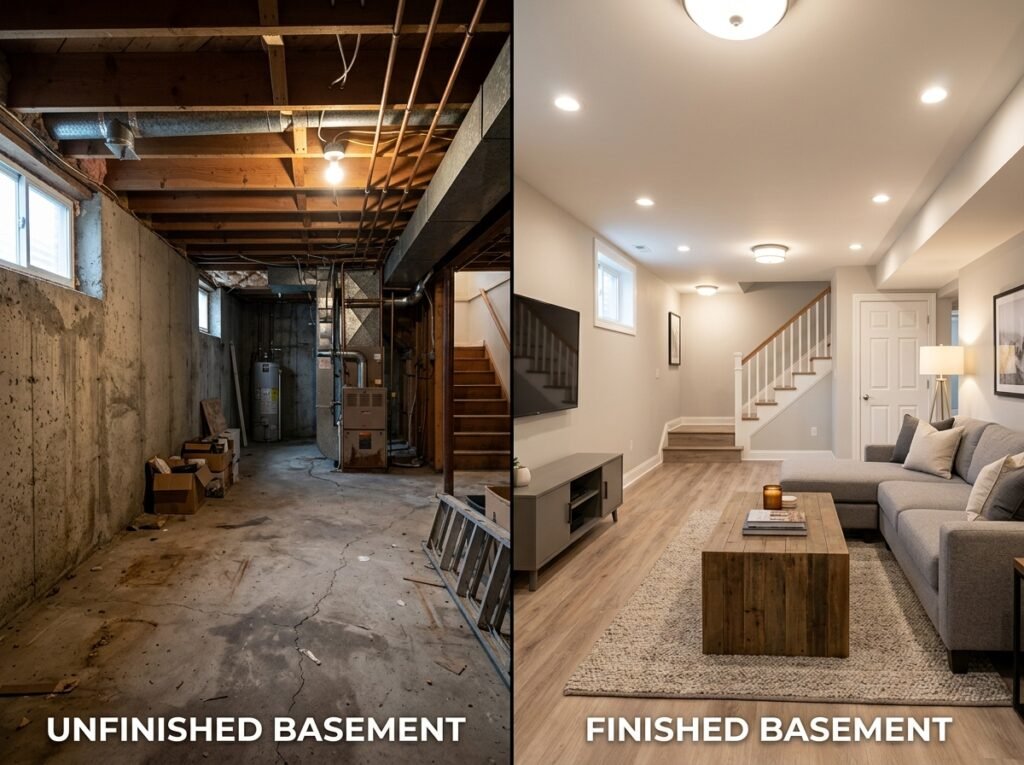
Room addition / finished basement only | Single or 2-zone mini-split | $2,500-$8,000 | Extend conditioning to space not served by central system |
Historic district property (CHAP, etc.) | High-velocity mini-duct or mini-split | $13,000-$30,000 | Preserve original fabric; minimize invasive ductwork |
Rural property – no gas service | Cold-climate heat pump (electric only) | $7,500-$13,000 | All-electric; no gas line extension required |
Frequently Asked Questions
A: HVAC installation costs in Maryland depend heavily on property type, system type, and whether ductwork is required. Central heat pump with existing ductwork: $7,500-$16,000 depending on size. Central heat pump with new ductwork: $14,000-$35,000. Ductless mini-split systems for Baltimore City rowhouses: $5,000-$16,000 for 2-4 zones. Dual-fuel (heat pump + gas furnace): $9,000-$16,500. Gas furnace with central AC: $7,000-$13,000. Fortune Homes MD provides a Manual J calculation and line-item estimate for every HVAC installation after a property walkthrough.
A: For most Baltimore City rowhouse renovations, a ductless mini-split heat pump system is the right answer. Installing central ductwork in a Baltimore City rowhouse – with plaster walls, narrow floor cavities, and party walls – costs $15,000-$25,000 just for the ductwork, before any equipment. A 3-4 zone mini-split system serving the same property costs $7,500-$13,000 total and requires only small wall penetrations for refrigerant lines. For rowhouses targeting ARV under $400,000, mini-splits are buyer-accepted and cost-effective. For rowhouses targeting ARV above $400,000 where buyers expect central air, a high-velocity mini-duct system or premium multi-zone mini-split is the appropriate specification.
A: A Manual J load calculation is the engineering analysis that determines the correct size (in BTUs and tons) for an HVAC system in a specific building. It accounts for the home’s square footage, ceiling height, insulation levels, window area, orientation, and local climate zone. An HVAC system sized by square footage rule-of-thumb alone is frequently wrong – undersized systems run constantly and never reach setpoint in Maryland summers; oversized systems short-cycle, leave humidity uncontrolled, and wear out faster. Both scenarios produce buyer complaints and warranty callbacks. Fortune Homes MD performs Manual J load calculations on every HVAC installation project. This is not optional – it is the professional standard.
A: A dual-fuel system pairs an electric heat pump with a gas furnace in the same air handler. The heat pump provides efficient heating and cooling for most Maryland temperatures; when temperatures drop below approximately 35-40 degrees Fahrenheit, the gas furnace provides primary heat. This configuration maximizes heating efficiency (electric heat pump in mild weather) while using gas backup for sustained cold – which Maryland winters deliver. Dual-fuel systems are most appropriate for western Maryland properties where winter temperatures regularly exceed the heat pump’s efficient range, for any Maryland market where natural gas is available and the buyer demographic favors gas heat, and for large homes where all-electric heating costs at extreme temperatures are a buyer concern.
A: Yes – HVAC installation requires a mechanical permit in every Maryland jurisdiction. This includes new system installation, replacement of outdoor unit, air handler, or furnace, and any ductwork work involving new supply or return openings. A licensed HVAC contractor is required for permit applications in Maryland. Unpermitted HVAC work creates the same issues as other unpermitted mechanical work: buyer inspector flags, lender documentation requirements, and potential disclosure obligations. Fortune Homes MD files all mechanical permits and manages inspections in every Maryland county we serve.
A: The IRA Section 25C energy efficiency tax credit offers 30% of installed cost up to $2,000 for qualifying ENERGY STAR-certified heat pump HVAC systems – available through December 2032. To qualify, systems must meet ENERGY STAR criteria: typically SEER2 16+ and HSPF2 8.5+ for ducted heat pumps. Cold-climate heat pumps (rated to -13F) meet the highest efficiency criteria and qualify for maximum credits. Note: the tax credit benefits the homeowner/buyer, not the investor. However, installing a qualifying system is a marketing advantage – the listing can reference the available energy tax credit as a buyer benefit.
A: SEER2 (Seasonal Energy Efficiency Ratio 2) is the 2023-standard cooling efficiency rating for air conditioning and heat pump equipment – replacing the older SEER rating under a stricter testing protocol. Maryland’s minimum code requirement is 14.3 SEER2 for new installations. For fix-and-flip properties, Fortune Homes MD recommends specifying 15-17 SEER2 equipment as the standard – qualifying for BGE and Pepco utility rebates, positioned above code minimum, and at a price point that balances equipment cost against long-term operating efficiency. 18+ SEER2 equipment qualifies for IRA federal tax credits and is appropriate for premium market properties where energy efficiency is a buyer differentiator.
A: Timeline depends on scope. A new outdoor unit and air handler installation on an existing duct system (straightforward swap-out) takes 1-3 days. A full new ductwork installation in a home without ducts takes 5-10 days for the ductwork alone, plus 1-2 days for equipment installation after ductwork is complete. A mini-split system installation takes 1-3 days for a 2-4 zone system. Mechanical permit processing adds 1-3 weeks before work can begin in most Maryland counties. Fortune Homes MD builds HVAC rough-in and equipment installation timelines into the project schedule before construction begins.
A: All three MEP trades (mechanical/HVAC, electrical, plumbing) complete rough-in simultaneously in Phase 4 of Fortune Homes MD’s 12-phase rehab sequence. This coordination is deliberate: a combined MEP rough-in inspection passes all three trades in a single county inspection visit, eliminating multiple scheduling delays. After rough-in inspection passes, walls close, insulation is installed, and drywall begins. Fortune Homes MD’s in-house project management coordinates MEP scheduling so there is no waiting for one trade to clear before the next begins.
A: Call (410) 413-0739 or email info@fortunehomesmd.com. We schedule electrical walkthrough assessments within 3-5 business days. Our walkthrough identifies panel brand and amperage, wiring type, AFCI/GFCI status, and any safety hazard conditions (FPE panels, K&T, aluminum wiring). Written scope and cost estimate delivered within 5-7 business days. For pre-purchase evaluation, our electrical assessment can identify scope and budget before you close – letting you incorporate electrical upgrade costs into your offer and renovation budget.
Still have a question?
Related Renovation Services
Service | URL |
Complete Property Rehab | /services/fix-flip/renovation-services/complete-property-rehab/ – All MEP trades, one contract, one schedule |
Electrical System Upgrade | /services/fix-flip/renovation-services/electrical-system-upgrade/ – 200-amp service required for heat pumps |
Plumbing System Upgrade | /services/fix-flip/renovation-services/plumbing-system-upgrade/ – Coordinated MEP rough-in with HVAC |
Foundation Repairs | /services/fix-flip/renovation-services/foundation-repairs/ – Crawl space encapsulation improves HVAC efficiency |
Roof Replacement | /services/fix-flip/renovation-services/roof-replacement/ – Attic ductwork conditioned after roof is weathertight |
Property Inspection | /services/fix-flip/property-analysis/property-inspection/ – HVAC system age and condition flagged in investor inspection report |
Maryland Has 90-Degree Summers and Single-Digit Winters. Get the HVAC Right. Central heat pump – Dual-fuel – Mini-split – High-velocity – New ductwork – Manual J sizing All permits. All Maryland counties. Coordinated with your complete MEP schedule. (410) 413-0739 | info@fortunehomesmd.com | fortunehomesmd.com Serving: Baltimore – Montgomery – Howard – Anne Arundel – Prince George’s – Frederick – Carroll |