
Smart Home Integration Maryland New Construction The Future-Proof Infrastructure Plan That Builds Capability Into the Walls
Smart home technology decisions made at a new construction purchase decision date will be obsolete within 3–5 years. The specific smart devices available today, the smart thermostat model, the lighting control platform, the security camera system will be superseded by better technology before the home is 10 years old. This is not a reason to avoid smart home features. It is a reason to approach smart home design with infrastructure-first thinking: build the conduit routes, structured wiring, network topology and power circuits into the home’s walls during rough-in, when they are inexpensive and invisible, so that upgrading to new technology at any point requires plugging in a new device rather than opening walls to run new wire.
The Future-Proof Infrastructure Plan is Fortune Homes MD’s smart home integration design philosophy for Maryland new construction: decisions about physical infrastructure (what goes in the walls and where) are made during architectural design and installed during electrical rough-in. Decisions about technology devices (which smart thermostat, which lighting control system, which security camera brand) are made at trim-out when the client has current information about available technology, current pricing, and current platform compatibility. The infrastructure makes all future technology decisions possible. The device decisions made today don’t constrain the technology the home can support in 10 years.
Maryland’s 2021 energy code now requires smart thermostat compatibility in HVAC system specifications making some degree of smart home infrastructure a compliance requirement, not an optional feature, for all Maryland new construction. This compliance requirement is the baseline. The Future-Proof Infrastructure Plan builds from that baseline to a comprehensive smart home capability framework calibrated to the Maryland county, price tier, and client’s specific technology priorities.
We serve: Baltimore County · Montgomery County · Howard County · Prince George’s County · Anne Arundel County · Frederick County · Carroll County
📞 (410) 413-0739 📧 info@fortunehomesmd.com
Infrastructure vs. Device The Two Phases of Smart Home Integration
Smart Home System | Infrastructure Phase (During Rough-In) | Device Phase (During Trim-Out or Post-Move-In) |
Network / Wi-Fi | Structured wiring: Cat6A from central distribution panel (CDP) to each room location + all exterior camera mounting points. CDP located in a mechanical room or dedicated closet. Power outlet at CDP location. | Wireless access points (Eero, Ubiquiti, Google Nest) installed at Cat6A termination points. Router/modem connected at CDP. |
Smart Lighting Control | Conduit from lighting control panel location to each lighting circuit location. Neutral wire runs to every switch box (required for smart switch compatibility; single-pole switches that don’t use neutral wire are incompatible with virtually all smart switch platforms). | Smart switches (Lutron Caseta, Leviton Decora, Brilliant) or full dimmer-capable smart switches installed at all switch locations. Central lighting control hub if full automation desired. |
HVAC / Smart Thermostat | Low-voltage wiring from HVAC air handler location to all thermostat locations with C-wire (common wire) required for smart thermostat power. Conduit for multi-zone control wiring if multiple zones are planned. | Smart thermostat (Ecobee, Nest, Honeywell T9) installed at thermostat location. Zone sensors if multi-zone. Required by Maryland 2021 energy code to be compatible. |
Security Cameras (exterior) | Pre-wire: conduit + Cat6A or coax + power (dedicated 120V circuit) at each exterior camera mounting location. Typical locations: front door, garage, rear yard, side entries, driveway. All pre-wires run to the NVR/DVR location. | IP cameras (Reolink, Axis, Avigilon) installed at pre-wire locations. NVR (Network Video Recorder) at central location. Remote access via app. |
Video Doorbell | Doorbell transformer (16V AC) + Cat6A at front door location (Cat6A for IP doorbell cameras). The existing doorbell transformer is insufficient for video doorbell upgrade during rough-in. | Video doorbell (Ring, Nest Doorbell, Eufy) installed at pre-wire location. Smart lock (Schlage Encode, Yale Assure) if planned. |
Whole-Home Audio | Pre-wire: in-ceiling speaker rough-in wire (CL2 rated) from each speaker location to central audio distribution point. Speaker locations identified in floor plan design. | Amplifier and streaming sources (Sonos Amp, Denon HEOS) at distribution point. In-ceiling speakers (Polk, Klipsch, Polk Reserve) at pre-wire locations. |
Motorized Shades | Pre-wire: conduit + low-voltage wire + power (120V circuit at every shade location). Power at each shade is the critical infrastructure decision adding power to installed shade locations after drywall is very expensive. | Motorized shade units (Lutron Serena, Hunter Douglas) installed at pre-wire locations. Motor hub / bridge for app and voice control integration. |
EV Charging (Garage) | Dedicated 240V/50A circuit from electrical panel to garage EV charging location. Conduit for future flexibility. NEMA 14-50 outlet or hardwired Level 2 charger. | Level 2 charger (ChargePoint, Enel X JuiceBox, Tesla Wall Connector) installed at dedicated circuit. Smart charger preferred for remote monitoring and scheduled charging. |
Source: Fortune Homes MD smart home infrastructure design data; NEMA standards; Maryland 2021 IECC smart thermostat requirements; electrical code NEC 2020.
🔶 Build Smart Home Infrastructure Into Your Maryland New Construction
Infrastructure-first design. Future-proof capability. All 7 Maryland counties.
📞 (410) 413-0739
📧 info@fortunehomesmd.com
→ Energy-Efficient Design | → Architectural Design | → Electrical Design
Smart Home Infrastructure Cost What to Include at Each Maryland Price Tier
Price Tier | Infrastructure Cost | Included Infrastructure Systems |
$300K–$500K Essential | $2,500–$4,500 | Central network distribution panel + Cat6A to all rooms | Neutral wire at all switch boxes | C-wire at thermostats | EV charger circuit in garage | Front door video doorbell pre-wire | 2–4 exterior camera pre-wires |
$500K–$700K Enhanced | $4,500–$8,000 | All Essential + | Whole-home audio pre-wire (living room, kitchen, primary suite) | 6–10 exterior camera pre-wires | Motorized shade pre-wire at primary bedroom and living room | Smart lighting conduit in primary suite and main level |
$700K–$1M Premium | $8,000–$14,000 | All Enhanced + | Full home audio pre-wire (every room) | Centralized lighting control conduit from panel | Full perimeter camera coverage | Motorized shade pre-wire throughout | Dedicated network closet with UPS backup | Landscape lighting control pre-wire |
$1M+ Ultra-Premium | $14,000–$25,000+ | All Premium + | Commercial-grade network infrastructure (Ubiquiti UniFi, Cisco Meraki) | Full home automation control pre-wire | Theater/media room conduit | Pool/outdoor entertainment control | Security system backbone | Whole-home backup power pre-wire for generator integration |
FAQs Smart Home Integration Maryland New Construction
At minimum, Maryland new construction should include the following smart home infrastructure: (1) Cat6A structured wiring from a central distribution panel to all rooms enables wired internet and future technology at any location; (2) Neutral wire at every light switch box required for smart switch compatibility on virtually all platforms; (3) C-wire (common wire) at all thermostat locations required for smart thermostat power; (4) EV charger circuit (240V/50A) in the garage EV ownership in Maryland growing at 35% annually; (5) Video doorbell pre-wire (16V transformer + Cat6A) at front door; (6) 4–6 exterior camera pre-wires with power and Cat6A at each location. This essential package costs $2,500–$4,500 installed during rough-in a fraction of what it costs to retrofit after drywall.
Structured wiring is a pre-installed network of cables typically Cat6A ethernet, coaxial cable and speaker wire running from a central distribution panel (a closet or mechanical room location) to each room in the home. Unlike wireless-only smart home systems where every device depends on Wi-Fi signal strength, structured wiring provides a hardwired backbone that allows wireless access points, smart devices, security cameras, audio systems and any future technology to connect via cable at any room location. In Maryland new construction, structured wiring installed during rough-in costs $2,000–$5,000. The same wiring installed after drywall (requiring wall fishing, patch and paint) costs $8,000–$18,000 with significantly less clean results.
Maryland’s 2021 IECC energy code requires that HVAC systems in new residential construction be compatible with smart thermostat technology specifically, that the system include a C-wire (common wire) connection and be capable of communicating with programmable and smart thermostat platforms. This is a minimum compatibility requirement, not a mandate to install a specific brand of smart thermostat. However, smart thermostat compatibility is now a code compliance issue in Maryland, not an optional upgrade. Most modern smart thermostats (Ecobee, Nest, Honeywell T9) require a C-wire for proper operation ensuring C-wire is run to all thermostat locations during rough-in satisfies the code requirement and enables smart thermostat installation at any point in the home’s future.
Smart home devices (thermostats, switches, cameras, speakers, doorbells) should be installed during the trim-out phase of Maryland new construction after drywall and painting are complete, during the same phase as light fixtures, plumbing fixtures and appliance installation. Infrastructure (conduit, wire, circuits) is installed during rough-in when walls are open. Separating infrastructure installation (rough-in) from device installation (trim-out) has two advantages: (1) it allows device selection to occur closer to installation date when the client has current information about platform options and pricing; (2) it ensures infrastructure doesn’t constrain future device upgrades the wire in the wall can serve a different device brand than was specified on design day.
Still have a question?
Related Services
Feature | Details |
Discipline | Smart Home Integration Discipline 6 of 7 |
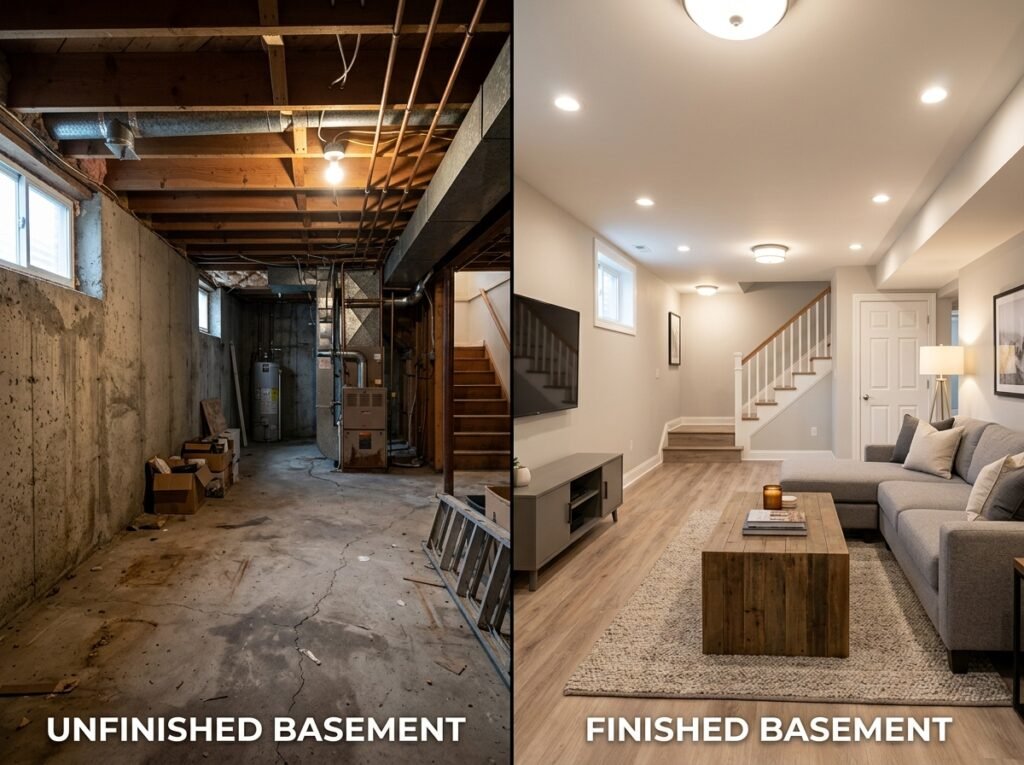
Infrastructure Phase | During rough-in: conduit, Cat6A, speaker wire, power circuits when installation is inexpensive and invisible |
Device Phase | During trim-out: smart switches, thermostats, cameras, speakers, doorbells selected when current technology is known |
Maryland Code (2021 IECC) | Smart thermostat compatibility required | C-wire at all thermostat locations | Minimum compliance baseline |
Essential Package | $2,500–$4,500 | Cat6A | Neutral wires at switches | C-wire at thermostats | EV circuit | Doorbell + 4–6 camera pre-wires |
Enhanced Package | $4,500–$8,000 | All Essential + audio pre-wire + full camera coverage + shade pre-wire |
Retrofit Cost Comparison | Rough-in: $2,000–$5,000 | Post-drywall retrofit: $8,000–$18,000 with inferior results |
EV Circuit | 240V/50A dedicated circuit | NEMA 14-50 outlet or hardwired Level 2 | Maryland EV adoption +35% annually |
Network Backbone | Cat6A from central distribution panel to every room | Enables wired access points = better Wi-Fi than wireless-only |
Service Area | 7 Maryland counties county-appropriate smart home specs in all markets |
Phone | (410) 413-0739 |
info@fortunehomesmd.com |